Sourcing
How to read a GSM number (and when it lies to you)
Fabric weight is the number everyone quotes and the one most often misread. Here is what it actually tells you about a garment.
Uriba Production Team
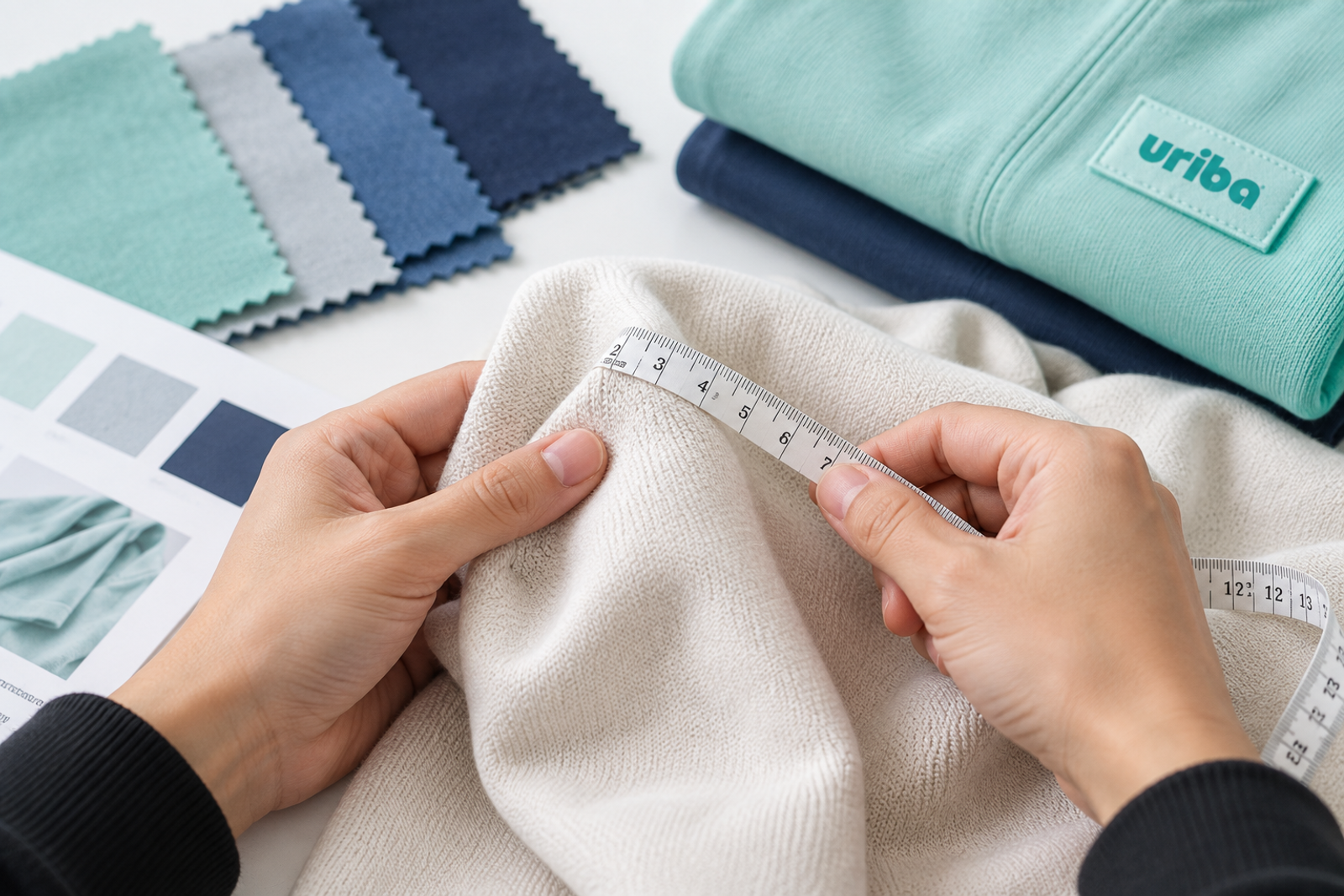
GSM — grams per square metre — is the first spec most buyers ask for, and it is genuinely useful. It is also routinely used to imply things it does not guarantee.
What GSM does tell you
It tells you how much material is in a given area. Between two garments of the same fibre and the same knit structure, the heavier one will be more opaque, hold a print better, and drape with more structure. A 180 GSM jersey tee and a 240 GSM jersey tee are meaningfully different products.
What GSM does not tell you
Fibre quality. A 240 GSM tee knitted from short-staple carded cotton can feel coarser and pill faster than a 180 GSM combed ring-spun one. Weight says nothing about staple length, and staple length is most of what you feel.
Knit structure. Loopback fleece, brushed fleece and French terry at identical GSM behave completely differently. The brushed one feels warmer and softer; the loopback one is more durable and gets better with age.
Shrinkage. Whether the fabric was pre-shrunk or garment-washed after assembly matters more to how the garment performs over a year than a 20 GSM difference.
A practical way to spec
Ask for three numbers instead of one:
- GSM
- Fibre and yarn type — for example "combed ring-spun cotton, 30s single"
- Finishing — pre-shrunk, enzyme washed, garment dyed
Then ask for a physical swatch. Ten seconds in the hand settles arguments that three emails about GSM will not.
Ready to start your project?
Free consultation · Quick response · No obligation